

For years, many Dynamics 365 and Power Platform teams organized planning around release waves. Microsoft now says release plans are retiring and new capabilities will be published to the AI at Work roadmap beginning in September 2026. The shift creates one continuously updated destination for Dynamics 365, Power Platform, and Dataverse innovation.
An always-on roadmap improves visibility, but it can also create continuous-change anxiety. New items appear more frequently, AI capabilities evolve quickly, and business stakeholders may interpret every announcement as an immediate commitment. ERP leaders need a lightweight operating model that converts a flowing roadmap into deliberate adoption decisions.
A roadmap item is not a production date
Product roadmaps communicate direction and projected availability. They are not the same as a tested release in your tenant, region, license, configuration, or integration landscape. Preserve the source status, availability stage, geography, prerequisites, and last-updated date when recording an item. Reconfirm before funding or communicating a firm delivery date.
Create a common vocabulary: watch, assess, pilot, adopt, defer, and reject. This prevents an early-preview announcement from entering a committed project plan. It also gives business sponsors a transparent reason why a promising feature may wait.
Replace wave planning with continuous intake
Assign a product owner or small cross-functional council to review roadmap changes on a fixed cadence. Weekly may suit an active transformation; monthly may suit a stable environment. Include ERP process owners, architecture, security, integration, data, support, and change management. Do not invite the whole organization to every review.
For each item, capture the business problem, affected roles, expected value, maturity, dependencies, data implications, security concerns, customization impact, integration touchpoints, testing effort, training need, and exit strategy. Score it against current priorities. The intake backlog should compete for capacity like any other portfolio demand.
Focus on outcomes, not feature volume
An AI-assisted procurement capability may sound attractive, but the useful question is whether it reduces buyer effort, improves exception handling, shortens cycle time, or lowers avoidable spend without weakening controls. A finance automation should be measured against close effort, exception rates, and auditability. A warehouse enhancement should connect to pick accuracy, throughput, or worker safety.
Avoid invented ROI. Establish a baseline, define a measurable pilot, and include the operating cost of licenses, integration, support, monitoring, and human review. Some features save time but add governance overhead; both belong in the decision.
Protect the integration landscape
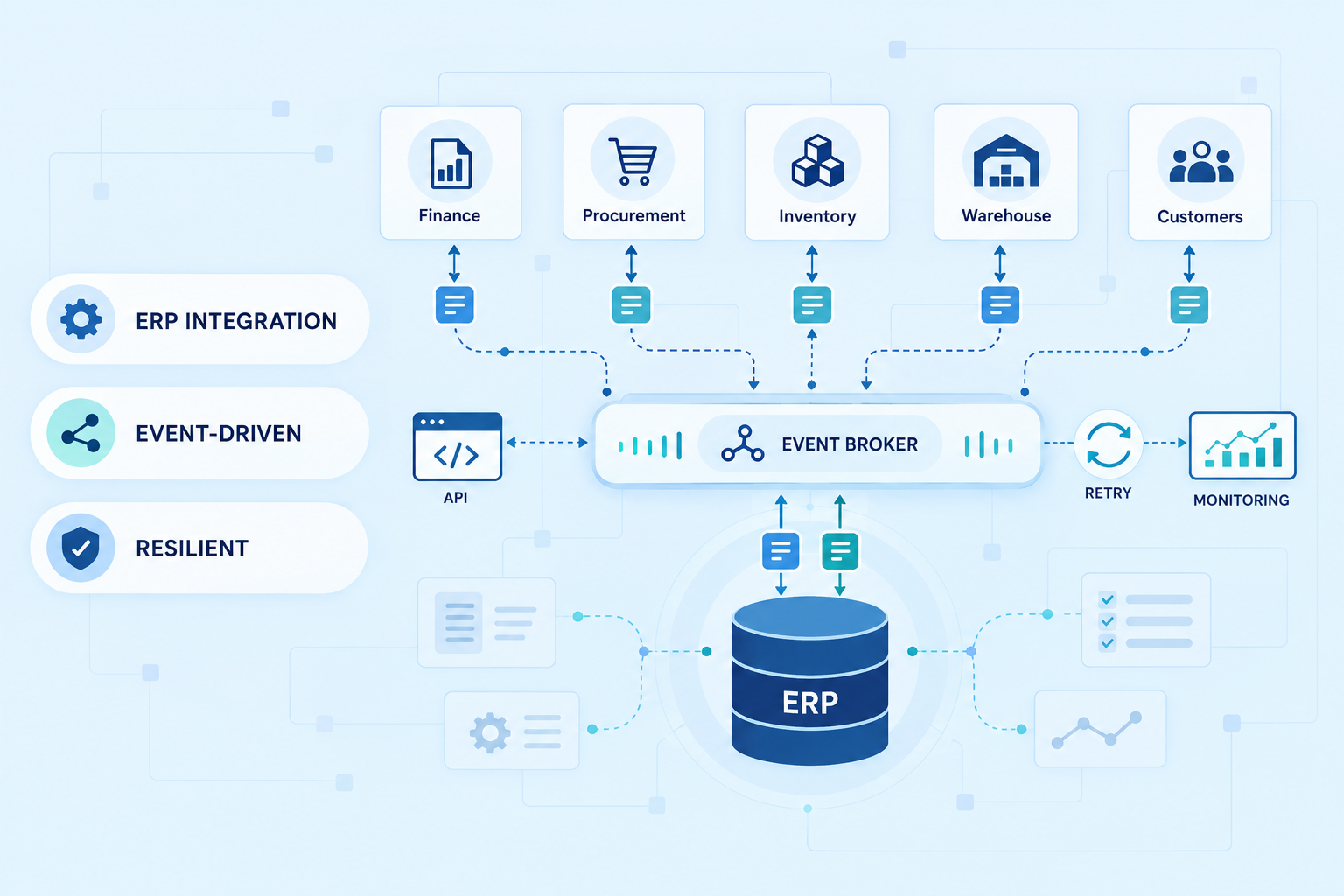
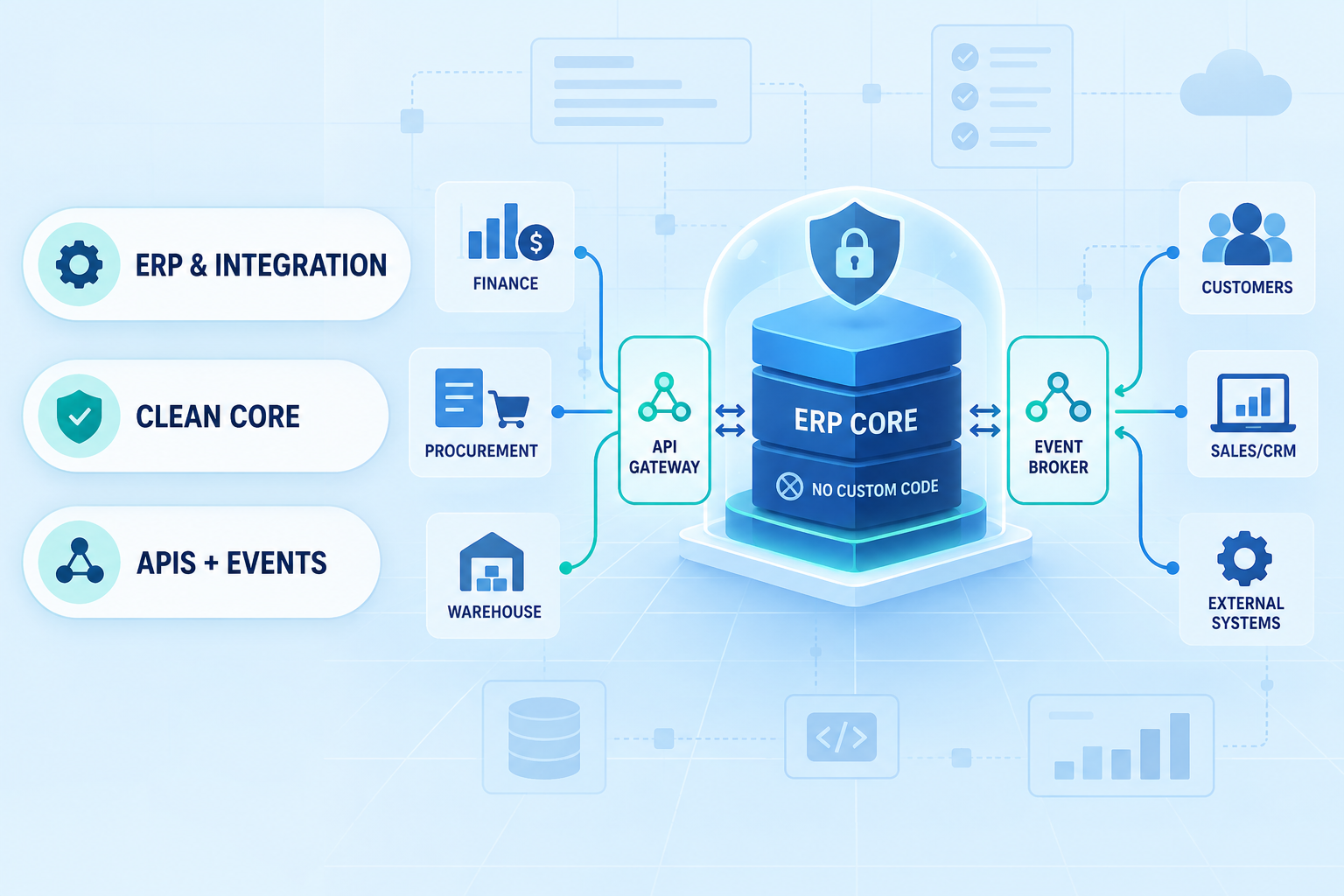
ERP change rarely stays inside ERP. A field, event, workflow, or security model may affect CRM, MES, warehouse systems, tax engines, banks, reporting, master data, and partner APIs. Maintain a dependency map and contract tests for critical interfaces. Use representative nonproduction data and verify both forward and rollback paths.
For plant-connected scenarios, separate planning convenience from operational control. An ERP or AI feature may improve production scheduling or exception analysis, but it should not bypass MES, quality, safety, or approved device-control boundaries. Trace decisions from enterprise planning to execution and confirmation.
Create adoption lanes
Use different lanes for mandatory platform changes, security fixes, low-risk usability improvements, process redesign, and experimental AI. Mandatory items receive deadline-driven planning. Low-risk improvements can use a fast path with regression tests. Process and AI changes require evidence, role design, data governance, and human oversight.
A sandbox should mirror the integrations and permissions that matter, not become a demonstration island. Pilot with a bounded user group and real work. Define success, stop conditions, fallback, support ownership, and feedback capture before enabling the feature.
Control communications
Publish a short internal digest that distinguishes what Microsoft announced, what applies to your estate, what the team is evaluating, and what users must do. Most roadmap items require no immediate action. Saying that clearly reduces noise and prevents shadow configuration.
For adopted changes, provide role-based communication: what changes, why, when, how work differs, where to get help, and what happens to the old process. Measure adoption and exceptions after launch instead of declaring success at deployment.
Automate monitoring carefully
A roadmap feed or notification can populate an intake queue, but AI summarization should not make adoption decisions. Preserve links to official material, detect changes to status or timing, and require an accountable owner to assess impact. Deduplicate repeated announcements and retain decision history so teams know why an item was deferred.
Connect roadmap intake to application lifecycle management. Approved work should flow into design, build, automated testing, security review, deployment windows, observability, training, and support. Continuous discovery does not require continuous uncontrolled deployment.
Measure roadmap effectiveness
Track time from relevant announcement to decision, percentage of items with accountable owners, pilot-to-adoption rate, regression defects, change failure rate, user adoption, support volume, and realized operational benefit. Also track deferred and rejected items. A healthy roadmap process says no frequently and for documented reasons.
The move to an always-on roadmap is an opportunity to modernize ERP governance. The winning teams will not adopt the most features. They will identify relevant change earlier, test it safely, communicate it clearly, and invest only where business outcomes justify the disruption.
Sources
Build it with Cogniquaint experts
Cogniquaint’s ERP and integration experts can establish an always-on roadmap intake process, map cross-system dependencies, create adoption lanes and contract tests, run controlled pilots, and connect new capabilities to measurable finance, supply-chain, plant, and workforce outcomes.
Work with Cogniquaint
Ready to elevate your operations with AI-powered insights?
Get in touch with us to build your next intelligent solution.