
Predictive maintenance is often presented as a model that forecasts failure. In a factory, the model is only one step. The complete system must collect trustworthy IoT signals, understand the equipment’s operating state, deliver a useful recommendation, fit the maintenance process, and learn whether the intervention helped. If any link is missing, the project produces interesting scores but little operational improvement.
Manufacturers need this convenience because maintenance decisions are scattered across sensor screens, operator notes, work orders, parts history, and individual experience. During a busy shift, nobody should have to compare five systems to decide whether a pump needs inspection. AI can organize the evidence and prioritize attention, while technicians and production leaders retain control of the action.
Define the decision before choosing the model
Start with a decision the plant can act on: inspect a bearing during the next planned stop, reduce load and monitor, verify lubrication, or create a high-priority work order. Identify the lead time required, the cost of a missed issue, and the operational cost of a false alert. A model that detects a problem ten minutes early may be technically accurate but useless if the maintenance window must be scheduled a day ahead.
Choose equipment where the failure mode is meaningful, signals are available, and technicians can provide feedback. Pumps, motors, compressors, fans, and conveyors can be candidates, but each asset class and duty cycle differs. Avoid treating every vibration pattern as interchangeable or promising failure prediction without adequate historical evidence.
Build the evidence layer
IoT sensors capture vibration, temperature, current, pressure, flow, acoustic signatures, or operating states. Those readings need synchronized timestamps, units, sensor health, asset identity, and the context of speed, load, recipe, product, shift, and maintenance state. The Microsoft predictive-maintenance reference architecture illustrates this need by combining IIoT events with contextual information such as maintenance history, technician shifts, component costs, and asset metadata.
Context prevents predictable errors. Elevated vibration during startup may be normal. A temperature change after a product transition may reflect a new setpoint. A flat signal may mean sensor failure rather than stable equipment. Data-quality rules should flag gaps, impossible values, drift, and stale devices before model scoring.
A realistic maintenance loop
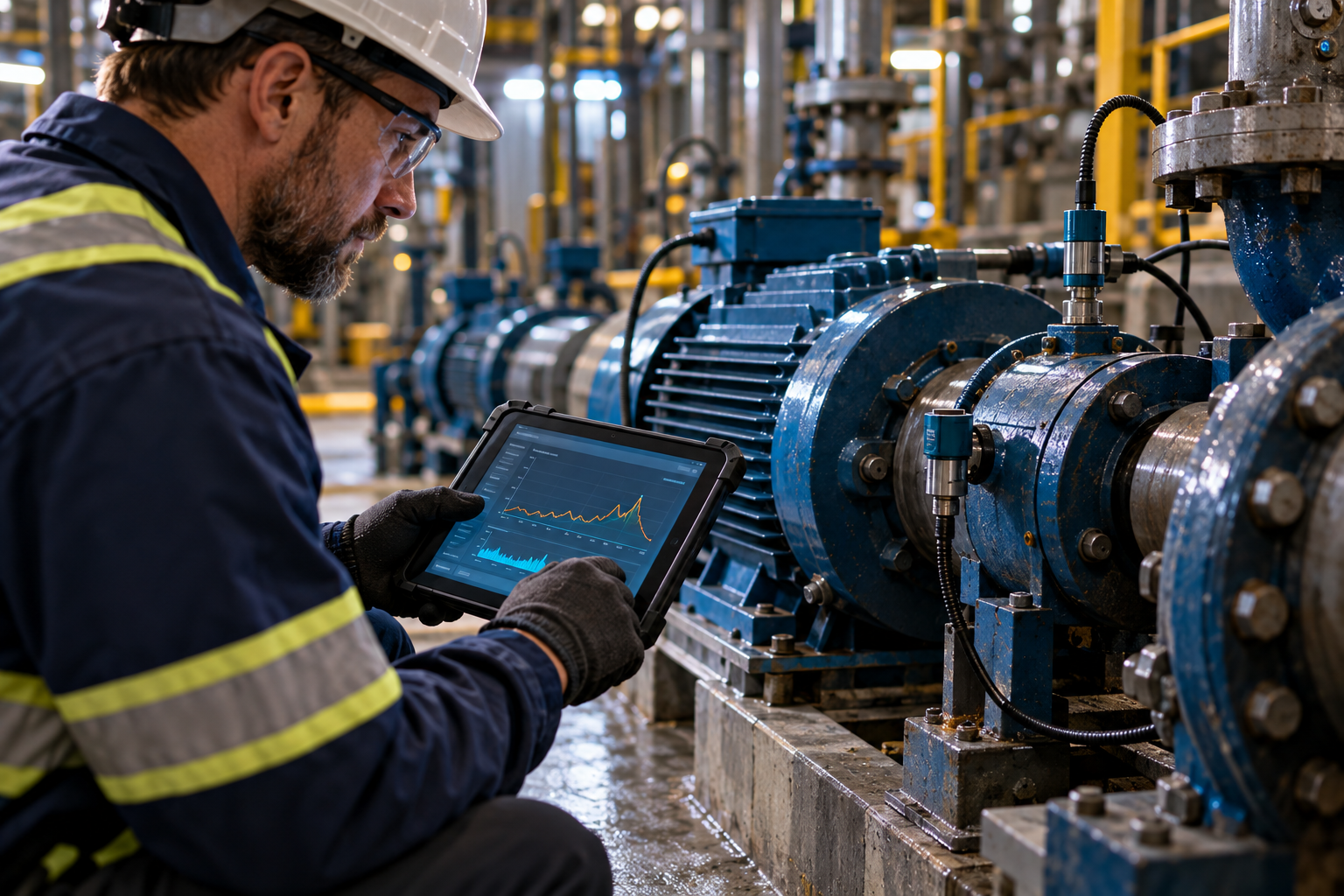
Imagine a plant with several critical cooling-water pumps. Edge devices collect vibration and motor-current features and continue basic monitoring even if the external connection is unavailable. A model compares current behavior with the pump’s own baseline under similar load. It detects a persistent pattern consistent with degradation, but it does not directly stop the pump.
The recommendation appears in the maintenance queue with the affected asset, contributing signals, operating state, recent work history, and suggested checks. A reliability engineer reviews the evidence and approves an inspection for the next planned pause. The technician records bearing condition and action taken in the maintenance system. That disposition becomes labeled feedback for later evaluation.
This workflow makes operations smoother in three ways. It reduces manual trend hunting, directs limited technical attention toward higher-risk assets, and coordinates work with production rather than creating surprise interruptions. The value comes from the closed loop, not from the alert alone.
Govern AI as an operational control
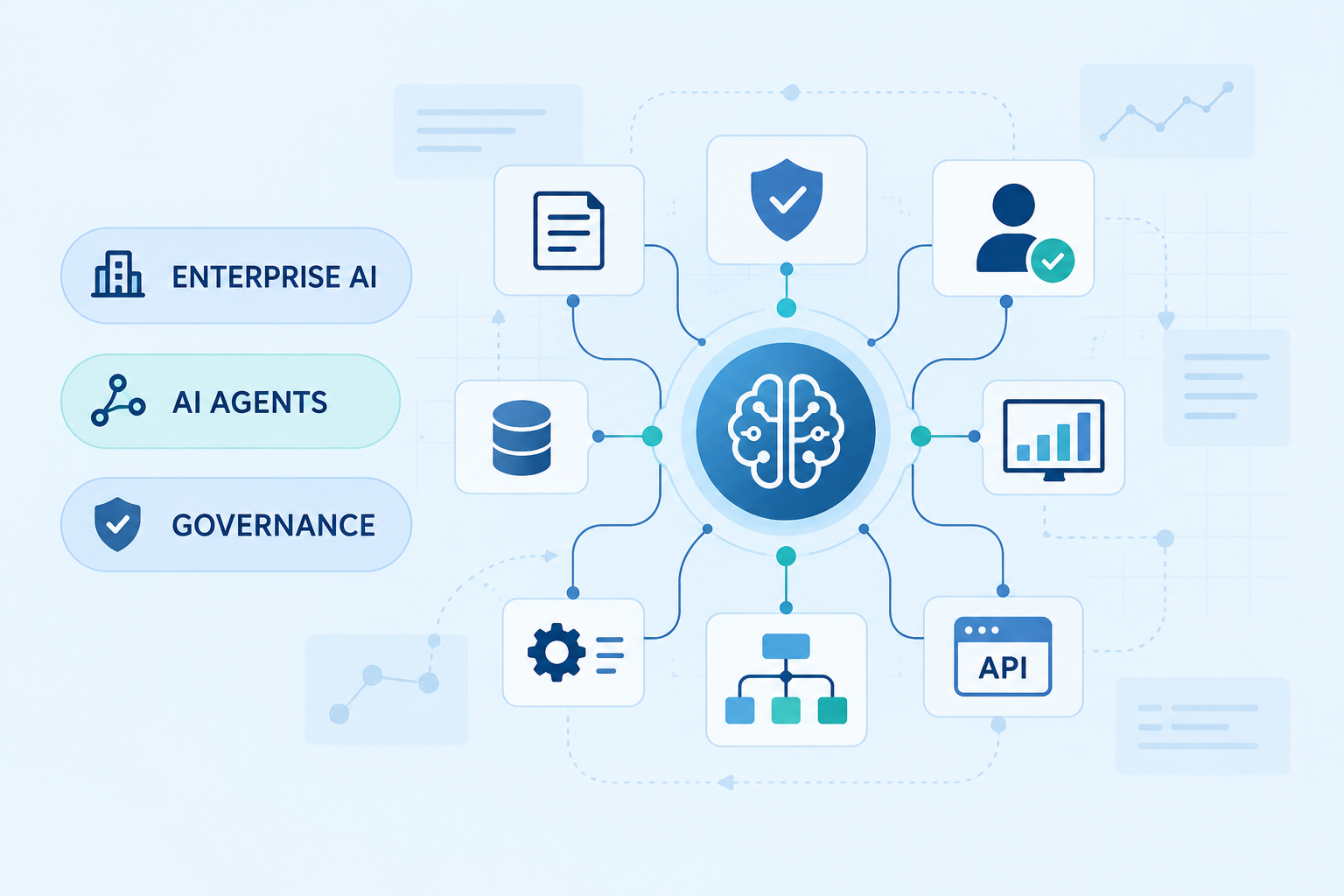
The NIST AI Risk Management Framework organizes AI risk work around Govern, Map, Measure, and Manage. Applied to maintenance, governance means naming owners for the use case, data, model, threshold, workflow, and final decision. Map the people and processes affected, including operators who may receive alarms and planners who schedule work. Measure performance across different assets and conditions. Manage unacceptable risks with fallbacks, approvals, monitoring, and retirement criteria.
Human oversight must be designed, not added as a label. Specify which recommendations require acknowledgement, who may approve a work order, when a deterministic safety rule overrides AI, and how users can challenge a result. Show useful evidence without pretending the model can explain more than it actually can. Capture overrides as data instead of treating them as resistance.
Monitor the system after deployment
Track sensor availability, feature distributions, alert volume, time to acknowledgement, confirmed fault rate, false positives, missed known failures, lead time, and maintenance outcomes. Segment results by asset type and operating regime. Averages can hide a model that works on one line and fails on another. Revalidation is required when equipment, sensors, firmware, operating policy, or product mix changes.
Connectivity and latency also shape architecture. Urgent protective functions belong in established control and safety systems, not in a remote AI service. Edge inference may support low-latency monitoring, while central platforms handle fleet comparison, training, and long-term history. Define what continues during disconnection and how queued results are reconciled later.
Prove operational value carefully
Measure avoided emergency work only with an agreed baseline and verified maintenance evidence. More immediate indicators include reduced diagnostic time, earlier detection of confirmed issues, fewer unnecessary inspections, better schedule compliance, and faster access to equipment history. Run a controlled pilot on a bounded asset group, review results with technicians, and expand only when the workflow earns trust.
AI and IoT do not replace maintenance expertise. Together, they can make expertise easier to apply at the right moment, with less searching and better feedback. That is the practical path from prediction to smoother operations.
Sources
Build it with Cogniquaint experts
Cogniquaint’s AI, IoT, and data experts can partner with plant and reliability teams to frame the maintenance decision, instrument the evidence pipeline, build and evaluate models, integrate approvals and work orders, and establish monitoring that keeps people firmly in control.
Work with Cogniquaint
Ready to elevate your operations with AI-powered insights?
Get in touch with us to build your next intelligent solution.