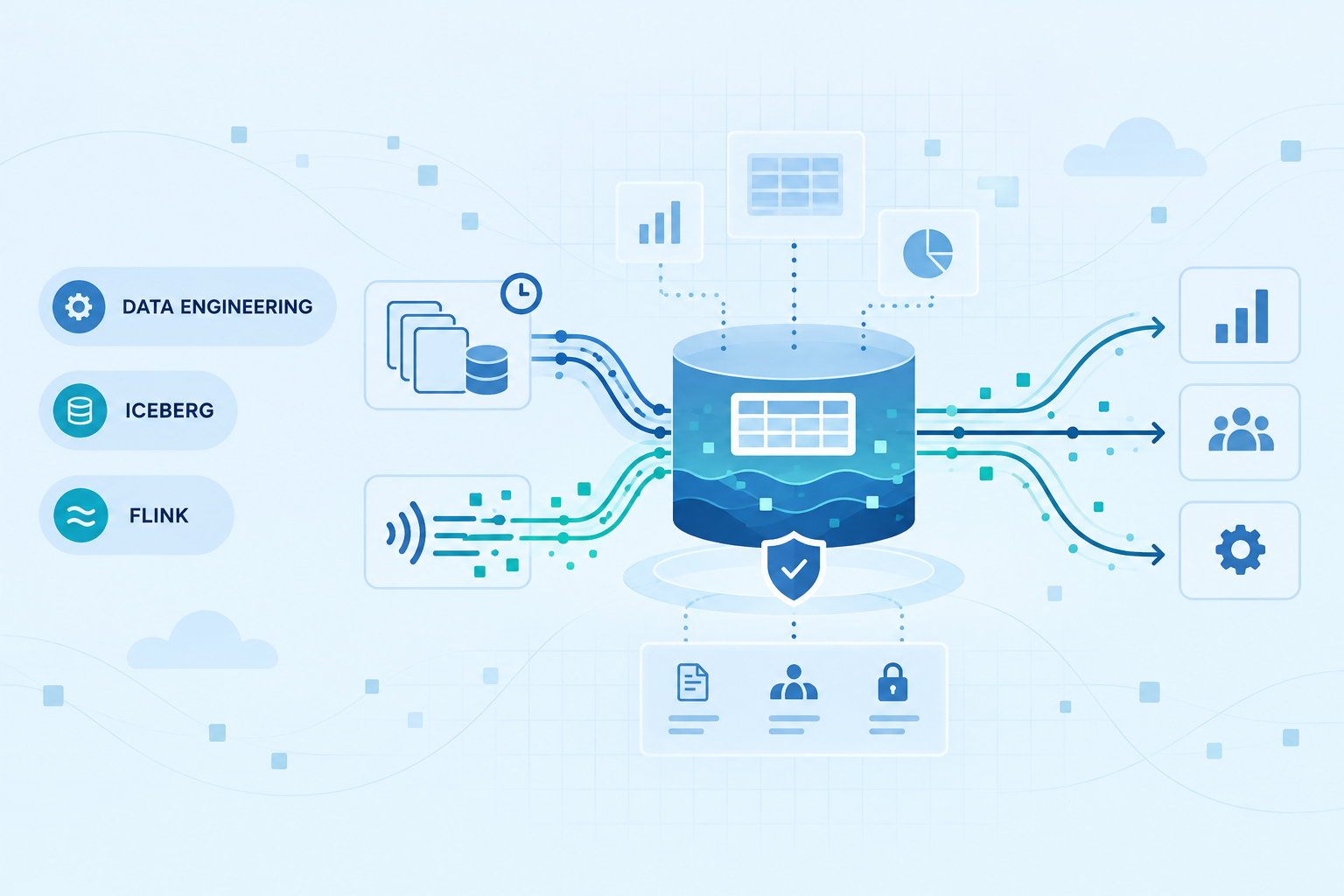


A factory can generate millions of readings and still leave operations teams asking basic questions. Which motor produced this vibration value? Was the line running, changing product, or being cleaned? Is the device healthy, or has a gateway simply stopped reporting? Raw tags answer none of those questions by themselves. The useful asset is an event stream whose values arrive with identity, state, quality, time, and production context.
This distinction matters because industrial convenience is not about giving managers another dashboard. It is about removing the repeated manual work of matching tag names to equipment lists, calling maintenance to confirm whether a machine was actually online, and reconciling production records after a shift. A contextual stream lets operators, engineers, data teams, MES applications, and AI services work from the same operational meaning.
Start with meaning, not movement
Many projects begin by moving every PLC tag into a broker or cloud database. That proves connectivity, but it often creates a data swamp at higher speed. A better design begins with a small set of business questions: Which assets constrain throughput? Which process conditions influence quality? Which signals show degradation early enough to act? Which events must update production or maintenance records?
For each selected signal, define an asset identifier, engineering unit, timestamp rule, quality indicator, source, expected frequency, and relationship to line, cell, work order, material, or batch. Preserve the original measurement, but add context in governed layers. A temperature of 82 becomes useful when it is known to be the drive-end bearing temperature for Pump P-204, recorded during a specific production run with a valid sensor state.
Use open industrial semantics where they fit
OPC UA PubSub defines a publish-subscribe communication model that can distribute data and events inside device networks and toward IT or analytics systems. Its value is not merely transport: OPC UA information models can preserve relationships and semantics that would otherwise disappear when data leaves the machine environment. Sparkplug adds conventions for using MQTT in industrial systems, including a topic namespace, payload structure, and session-state behavior. Birth and death messages help consuming applications understand whether an edge node or device is online rather than interpreting silence as a normal value.
These standards solve different parts of the problem and can complement each other. OPC UA may provide structured access to machine information, while an edge gateway maps selected signals into an MQTT/Sparkplug namespace for distribution. The architecture should not translate everything blindly. It should publish the operational events that downstream consumers can govern and support.
A practical factory workflow
Consider a packaging line with fillers, conveyors, labelers, and inspection cameras. The data engineering flow can collect motor current, speed, reject counts, and machine states at the edge. It attaches the enterprise asset identifier, line and cell, current SKU, work-order number, and data-quality status. A stream processor derives a short rolling baseline and emits a contextual event when current rises while conveyor speed falls.
The operator sees the event in the line view with its production context. Maintenance receives a recommendation only if the condition persists and the equipment is not in a planned changeover. The data platform retains the governed event for trend analysis. The MES can associate resulting downtime with the correct order. Nobody has to export three spreadsheets and align timestamps after the shift.
Where AI and IoT divide the work
IoT supplies timely evidence: measurements, states, and connectivity health. AI uses that evidence to detect patterns, estimate risk, rank likely causes, or recommend a next inspection. The AI result should become another governed event with model version, confidence or score, input window, asset context, and disposition. Operators remain accountable for safety and production decisions; the system gives them earlier, better-organized evidence.
This separation makes operations smoother. Edge rules can handle deterministic limits and urgent local alarms. Statistical or machine-learning models can identify multivariate patterns that fixed thresholds miss. Workflow logic can route only actionable cases, reducing alarm fatigue. Feedback from technicians—confirmed fault, no fault found, repaired component—returns to the data platform so models and rules can be evaluated against real outcomes.
Design for imperfect conditions
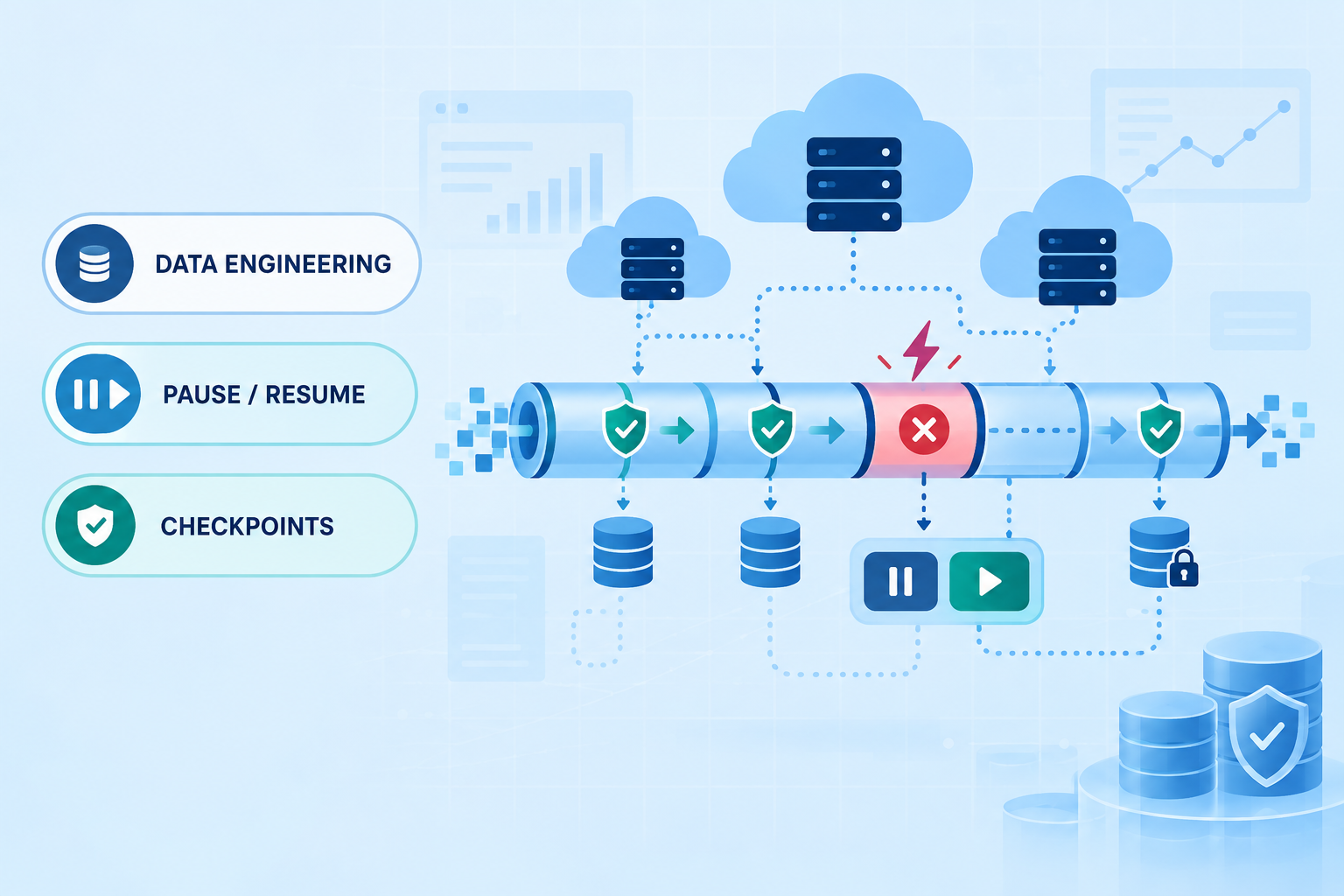
Industrial streams must survive clock drift, duplicated messages, late arrival, device replacement, network loss, and changing tag definitions. Assign stable event identifiers, make consumers idempotent, retain source timestamps and ingestion timestamps, and document ordering expectations. Buffer at the edge when connectivity fails, but define storage limits and what happens when they are reached. Monitor stale data and device state explicitly.
Security also crosses IT and operational technology boundaries. Use device identity, encrypted transport, least-privilege broker permissions, certificate rotation, network segmentation, and controlled remote administration. Treat configuration and semantic mappings as versioned production code. A convenient pipeline that cannot be audited or safely changed will eventually become an operational risk.
Measure usefulness, not tag volume
Good measures include time to diagnose a stoppage, percentage of events with valid asset and order context, stale-data detection time, false alert rate, mean time from anomaly to acknowledged action, and reconciliation effort per shift. Begin with one constrained workflow and compare it with the existing process. Expand only after operators trust the context and support teams can run the platform.
The smooth factory is not the one with the most connected signals. It is the one where the right event reaches the right person or system with enough context to support a safe decision.
Sources
Build it with Cogniquaint experts
Cogniquaint’s in-house data and industrial integration experts can work with operations, OT, and analytics teams to select high-value signals, define a governed asset namespace, implement OPC UA and MQTT integration, and operationalize reliable contextual streams for dashboards, MES workflows, and AI use cases.
Work with Cogniquaint
Ready to elevate your operations with AI-powered insights?
Get in touch with us to build your next intelligent solution.